Audio Files
The Audio Files section allows you to manage audio files and create playlists that can be used throughout your phone system. These audio files serve various purposes like greetings, music on hold, menu prompts, and announcements.
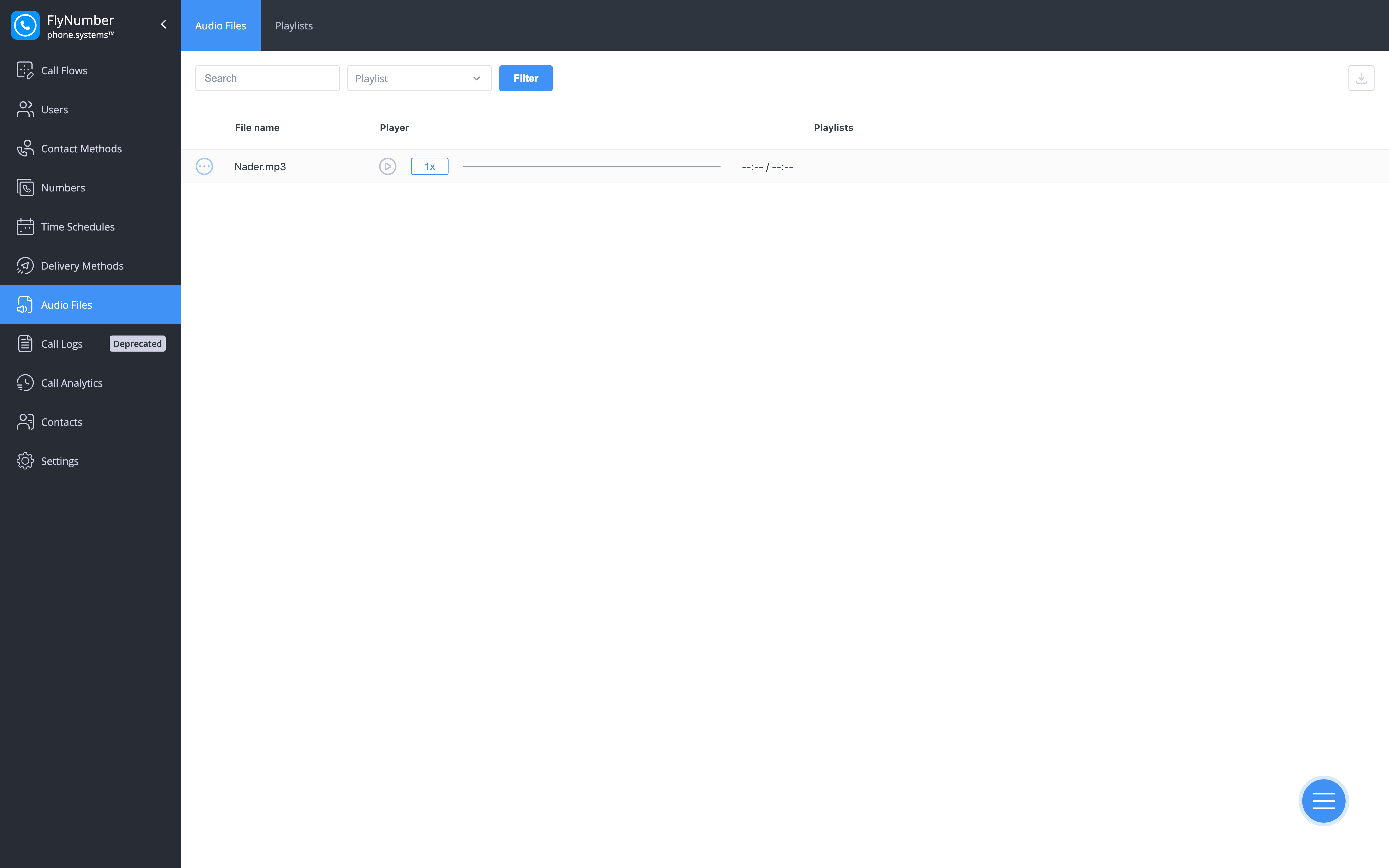
Managing Audio Files
The interface displays your audio files with the following information:
- File name
- Playback controls
- Duration
- Playlist assignments
You can:
- Play files directly in the interface
- Adjust playback speed (1x)
- See which playlists use each file
Adding Audio Files
There are three ways to add audio files:
1. Upload Audio File

Upload existing audio files:
- Supported formats: .mp3, .m4a, .wav, .flac, .ogg
- Maximum file size: 14 MB
- Files should be clear and professional quality
- Once the upload finishes, press Play in the list to check the file before using it in a call flow
2. Record Audio File
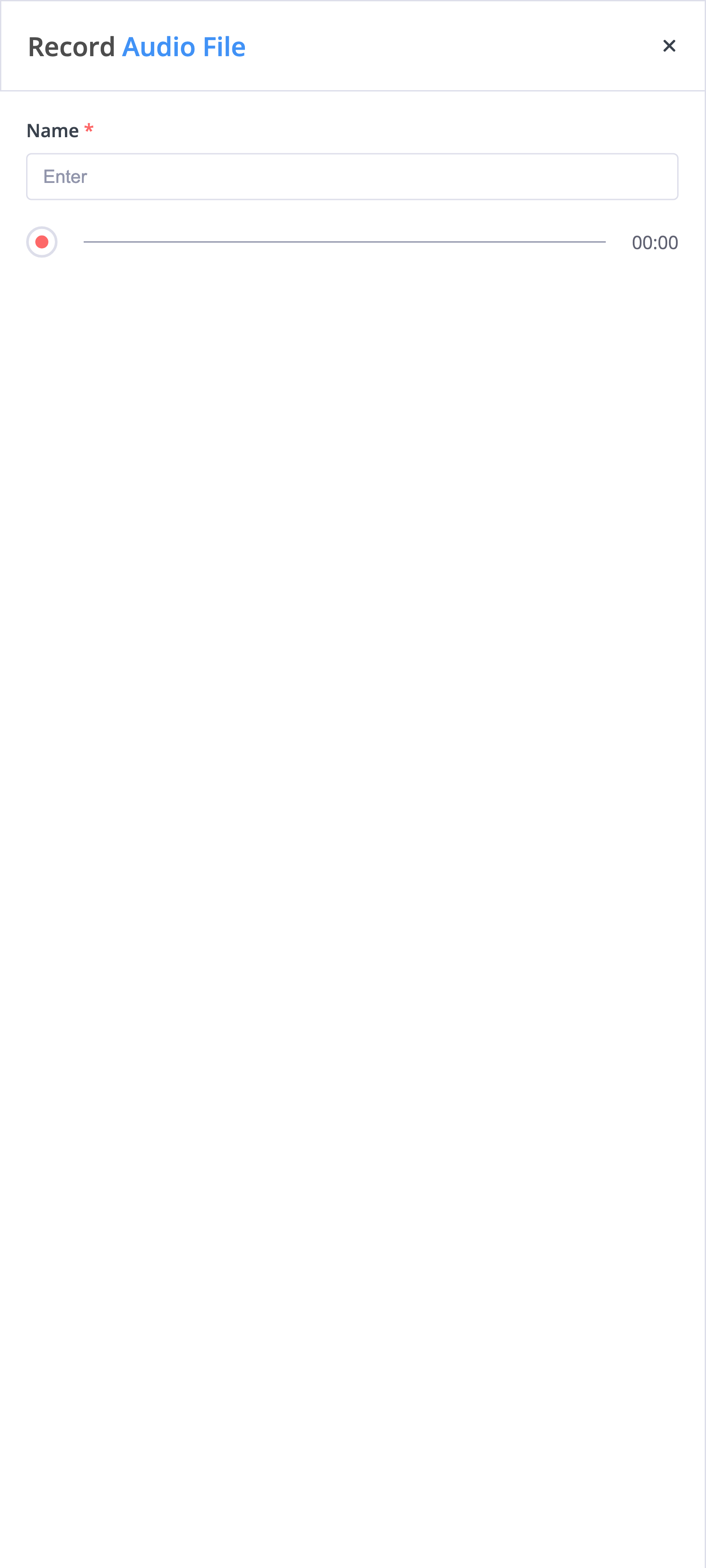
Record messages directly in your browser:
- Click the + button
- Select "Record audio file"
- Enter a name for your recording
- Click the red record button to start
- Click the stop button when finished
- Press play to preview your recording
- Save or re-record as needed
Recorded files have the same 14 MB limit as uploads.
- Use a good quality microphone
- Record in a quiet environment
- Speak clearly and at a consistent volume
- Keep messages concise and professional
- Test recordings before using in your call flow
3. Text to Speech
Type a short announcement and let the phone system read it out — handy for a greeting or menu prompt when you don't have a recording to hand.
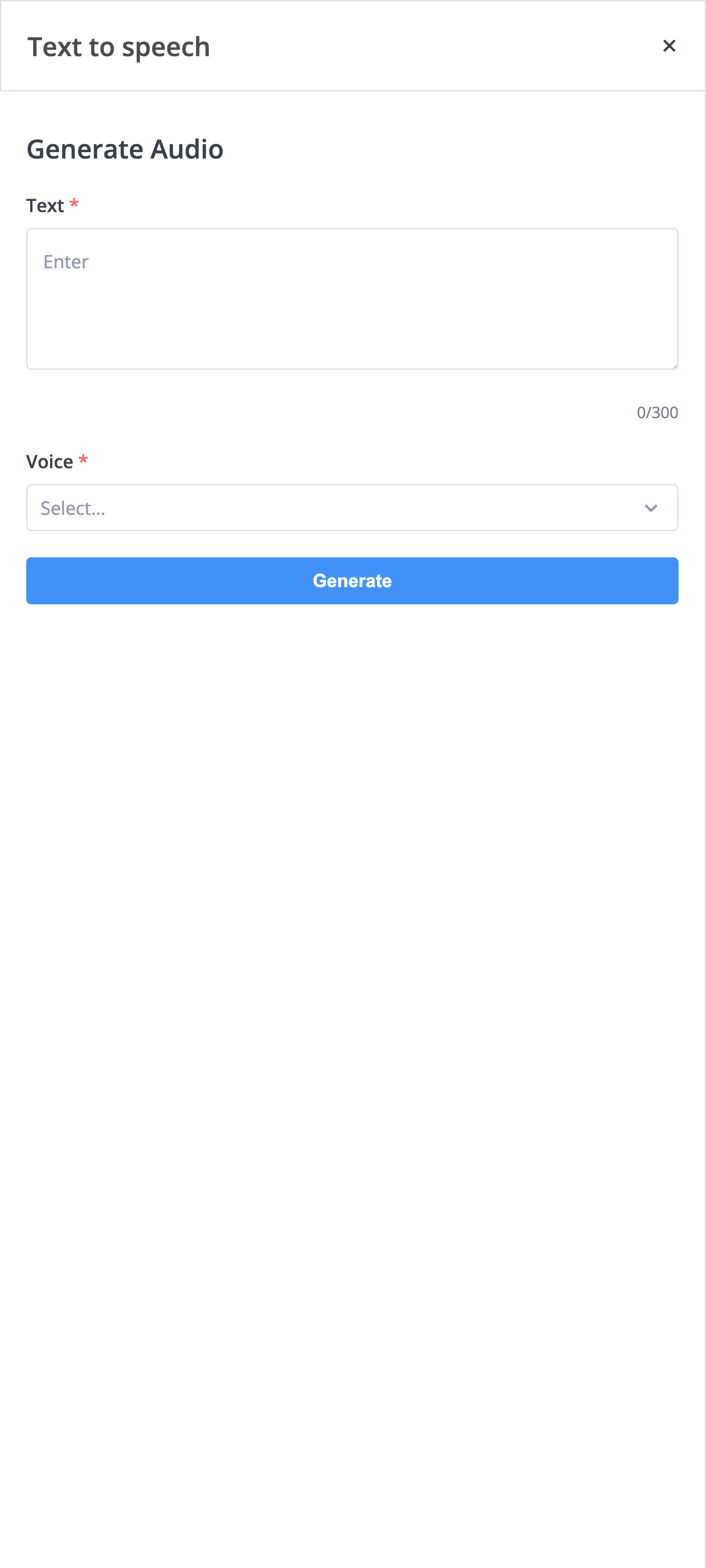
- Click the + button and choose Text to speech
- Enter the Text to be spoken (up to 300 characters)
- Pick a Voice
- Click Generate, listen to the result, give the file a name and save it
The generated file appears in the Audio Files list and can be used anywhere an audio file is selected. Inside a Voice Menu, Audio Playback or Voicemail module, the audio file dropdown offers the same thing as Create Audio File.
Creating Playlists
Playlists help you organize multiple audio files for features like music on hold or announcements.

To create a playlist:
- Go to the Playlists tab
- Click the + button
- Enter a name for your playlist
- Click "Add audio file" to select files
- Arrange files in your preferred order
- Save the playlist
Managing Playlist Order

You can:
- Drag and drop files to change their order
- Remove files using the X icon
- Preview the playlist sequence
- Edit playlist settings anytime
Editing and Deleting

Before deleting audio files or playlists, check for dependencies. You cannot delete files or playlists that are in use by modules in your call flows.
Both tabs use the same Actions menu (⋮) on each row:
| Action | Audio file | Playlist |
|---|---|---|
| Edit | Rename the file | Rename the playlist, add or remove files, change their order |
| Relations | Shows where the file is used — playlists, call flow modules, contact methods | Shows which call flows, Ring Groups or Queues play the playlist |
| Delete | Removes the file | Removes the playlist |
In the Relations view, click the gear icon next to an entry to jump straight to that module or setting.
To delete:
- Click the Actions menu (⋮) and select Delete
- If the item is still in use, the dialog shows a warning and a relations counter — click it to see the full list
- Unlink the item from those modules or playlists, then come back and click Delete
Common Uses
Audio files and playlists are used throughout the phone system:
| Feature | Audio Use |
|---|---|
| Voice Menu | Greeting and option messages |
| Ring Group | Music on hold, ringback tones |
| Queue | Wait music, position announcements |
| Voicemail | Greeting messages |
| Audio Playback | Announcements, messages |
-
File Management
- Use clear, descriptive names
- Keep files organized
- Remove unused files
- Back up important recordings
-
Audio Quality
- Use high-quality recordings
- Maintain consistent volume levels
- Ensure clear speech in messages
- Test audio before deployment
-
Playlist Organization
- Group related files together
- Consider playback order
- Keep playlists focused
- Update content regularly
Advanced Tips
| Feature | Description | Best For |
|---|---|---|
| Multiple Playlists | Create different playlists for various purposes | Department-specific needs |
| File Reuse | Use the same file in multiple playlists | Consistent messaging |
| Playback Speed | Adjust speed during preview | Quality checking |
| Dependency Check | System prevents deletion of in-use files | Safe management |
Remember to test your audio files and playlists in their intended modules to ensure proper volume levels and smooth transitions between files.